
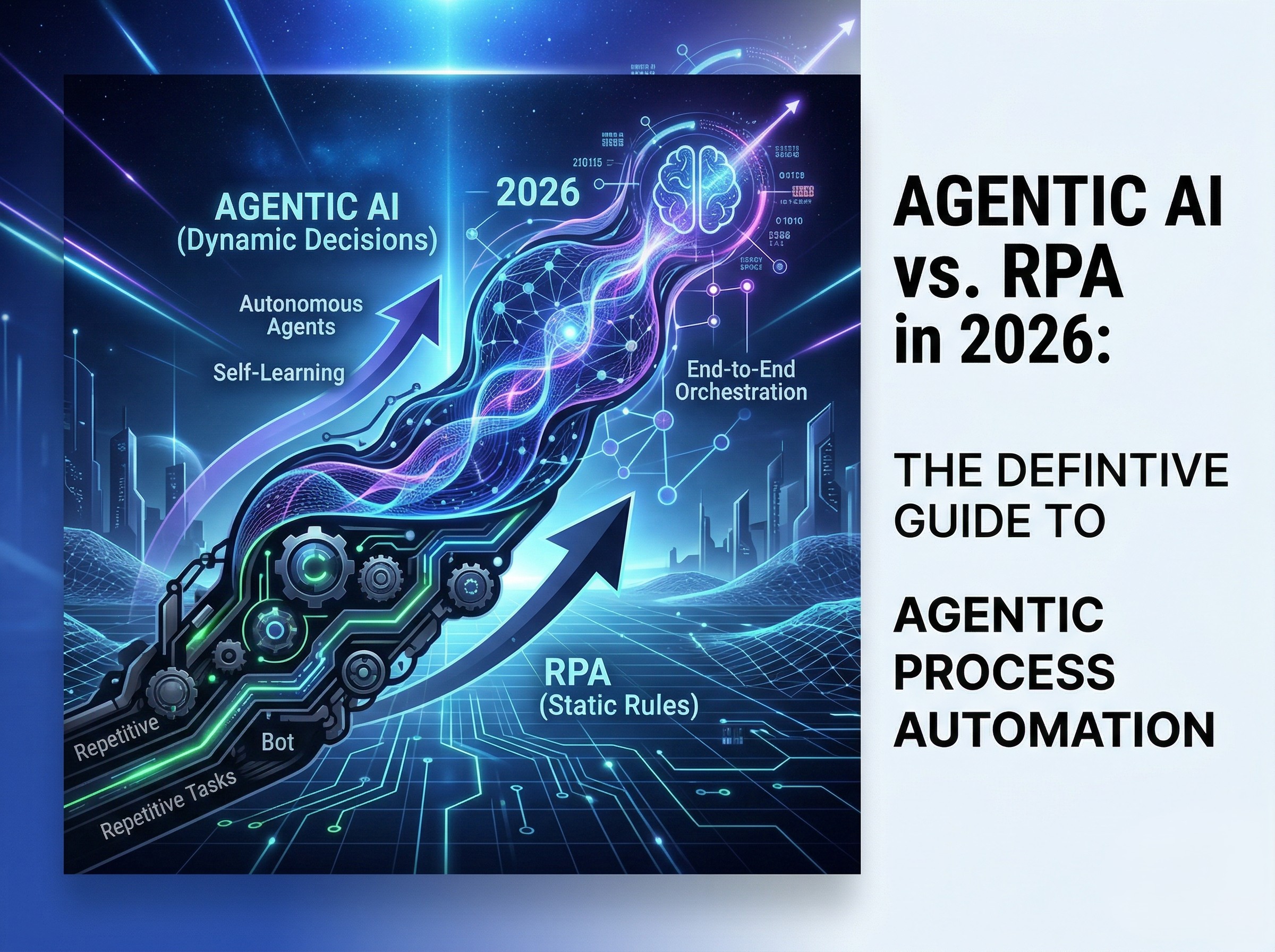
Agentic AI vs. RPA in 2026: The Definitive Guide to Agentic Process Automation


If your organization runs on RPA (Robotic Process Automation), you're not alone. Over the past decade, RPA became the go-to answer for operational efficiency — scripting bots to handle invoices, move data between systems, and manage repetitive back-office workflows. At its peak, the global RPA market was projected to exceed $13 billion by 2030.
But something has changed.
By early 2026, a growing number of enterprises — from Fortune 500 financial institutions to mid-market logistics firms — are quietly shelving their RPA rollouts. Not because automation is failing, but because a fundamentally better approach has arrived: agentic AI.
Agentic process automation (APA) represents a paradigm shift. Instead of bots that follow rigid, pre-programmed scripts, agentic AI deploys autonomous software agents that can reason, adapt, and make decisions in real time. They don't just follow rules — they understand context, learn from outcomes, and handle the messy, unstructured work that traditional RPA was never designed for.
This guide is written for business leaders who need to understand the difference, evaluate the opportunity, and decide what comes next for their automation strategy. We'll cover the core technology distinctions, real-world performance comparisons, cost implications, and a clear framework for deciding when to stick with RPA, when to upgrade to agentic AI, and how to manage the transition.
Key takeaway: Agentic process automation doesn't replace the idea of automation — it replaces the limitations. If RPA is a conveyor belt, agentic AI is a thinking workforce.
What Is RPA? A Quick Refresher
Robotic Process Automation (RPA) uses software bots to automate repetitive, rule-based tasks. Think of it as a macro on steroids — an RPA bot can log into applications, extract data from forms, move files, populate spreadsheets, and trigger downstream workflows, all without human intervention.
Where RPA Works Well
- High-volume, low-complexity tasks (e.g., copying data between two systems)
- Structured data environments with consistent formats (e.g., processing standard invoices)
- Stable processes that rarely change (e.g., monthly compliance reporting)
- Legacy system integration where APIs don't exist
Where RPA Breaks Down
- Unstructured data: emails, PDFs with varying formats, scanned documents
- Exception handling: when an invoice has a new field or a process changes, the bot fails
- Decision-making: RPA cannot evaluate trade-offs, weigh options, or adapt to ambiguity
- Maintenance burden: industry data shows 30–50% of RPA bots require rework within 12 months due to UI changes or process updates
The fundamental limitation is architectural. RPA bots are deterministic — they execute a fixed sequence of steps. If anything deviates from the script, they stop or produce errors. This makes them fragile in dynamic business environments.
What Is Agentic AI? The New Automation Paradigm
Agentic AI refers to autonomous software agents powered by large language models (LLMs), reasoning engines, and tool-use capabilities. Unlike RPA bots, these agents don't follow scripts — they pursue goals.
An agentic AI system works by receiving a high-level objective (e.g., "process this vendor invoice and flag anomalies"), then autonomously determines the steps needed to accomplish it. It can read unstructured documents, query databases, interact with APIs, make judgment calls, and even ask clarifying questions when it encounters ambiguity.
Core Capabilities of Agentic AI
- Reasoning: The agent can analyze a situation, weigh options, and choose the best course of action — not just the pre-programmed one.
- Adaptability: When processes change or unexpected data arrives, the agent adjusts its approach rather than breaking.
- Multi-step planning: Complex tasks that require 10, 20, or 50 sequential decisions can be orchestrated by a single agent.
- Tool use: Agentic AI can call APIs, search the web, query databases, and interact with enterprise software — dynamically deciding which tools to use.
- Learning from feedback: Over time, agents improve their performance based on human feedback and outcome data.
Think of it this way: An RPA bot is like a vending machine — press the right button and you get a predictable result. An agentic AI is like a capable employee — give them the goal and they figure out how to get there.
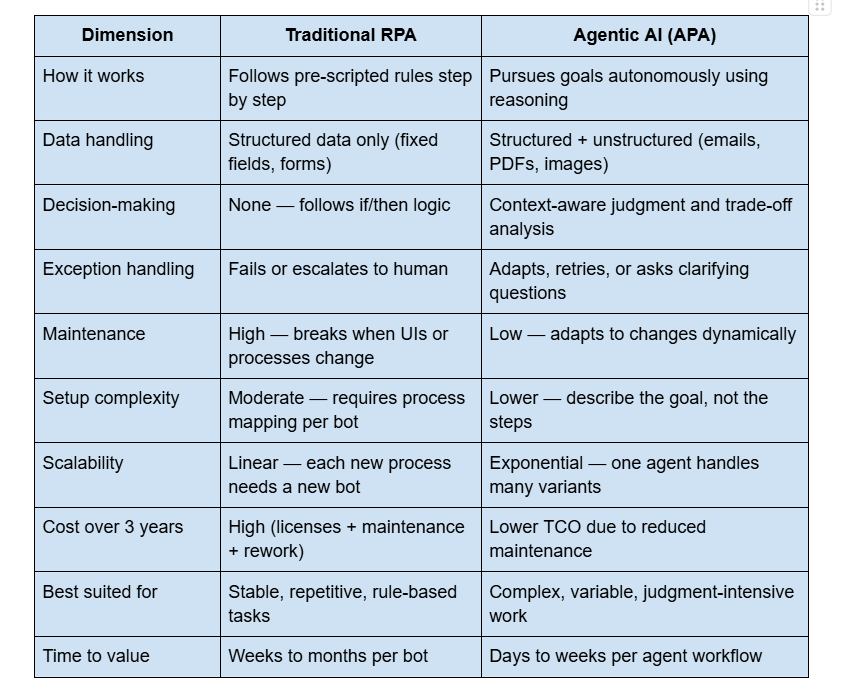
Agentic AI vs. RPA: A Side-by-Side Comparison
The differences between these two approaches go far beyond the underlying technology. Here's how they compare across the dimensions that matter most to business leaders.
Agentic Process Automation (APA): Why It Matters Now
Agentic process automation is the enterprise application of agentic AI to business operations. It's not a theoretical concept — it's being deployed today across industries. What makes 2026 the inflection point?
Three Converging Forces
1. LLMs have become reliable enough for production. The latest generation of foundation models (GPT-4 class and beyond) can follow complex instructions with accuracy rates exceeding 95% on well-defined enterprise tasks. This was not the case even 18 months ago.
2. Tool-use and orchestration frameworks have matured. Frameworks that allow AI agents to call APIs, interact with databases, and chain multi-step workflows are now production-ready. This is the infrastructure layer that turns a chat model into a working employee.
3. The ROI case for RPA is weakening. According to industry analysts, 30–50% of RPA implementations fail to deliver expected ROI, primarily due to maintenance costs and process fragility. Enterprises are actively looking for something better.
What APA Looks Like in Practice
Consider a real-world accounts payable workflow:
With RPA: A bot is programmed to download invoices from a specific email folder, extract data from a fixed template, validate against a purchase order in the ERP, and route for approval. If the invoice format changes, the bot breaks. If there's a discrepancy, a human must intervene.
With APA: An AI agent monitors incoming invoices across email, vendor portals, and shared drives. It reads invoices regardless of format, extracts relevant fields, cross-references against POs and contracts, flags anomalies with explanations, and routes for approval with a confidence score. If something doesn't match, it investigates further before escalating.
The difference isn't incremental — it's structural. APA handles the 80% of work that RPA was never designed to touch: the exceptions, the variations, the judgment calls.
Where Agentic AI Outperforms RPA: Industry Use Cases
Financial Services & Banking
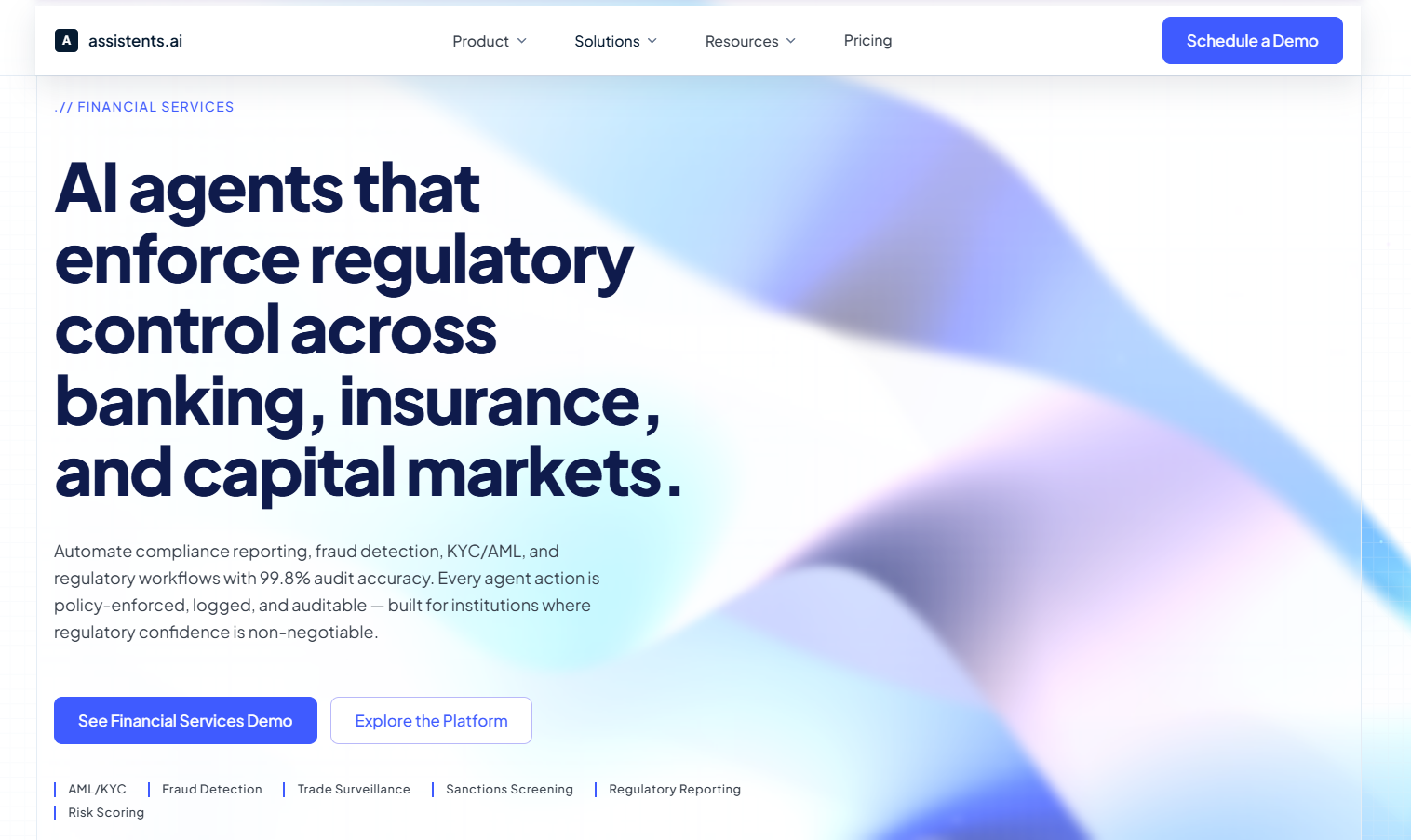
Banks and insurance companies were early RPA adopters, automating claims processing, KYC checks, and account reconciliation. But the limits showed quickly: varying document formats, regulatory changes, and complex exception handling created a maintenance nightmare.
Agentic AI agents can process claims end-to-end — reading medical records, policy documents, and adjuster notes, then making coverage determinations with audit trails.
Case Study — Global Fintech Provider (Banking Sector): A global fintech company serving banks and credit unions needed to modernize their disputes, fraud, and compliance workflows. Their legacy systems relied heavily on rule-based automation that couldn't keep pace with evolving regulatory requirements. After deploying omnichannel AI agents with auditable workflow automation, they achieved full integration across chat, email, and phone intake — with agent-assist summarization, next-best-action recommendations, and SLA monitoring built in. The result: dramatically faster resolution times and a compliance-ready audit trail that previously required manual effort from a team of six.
Supply Chain and Logistics
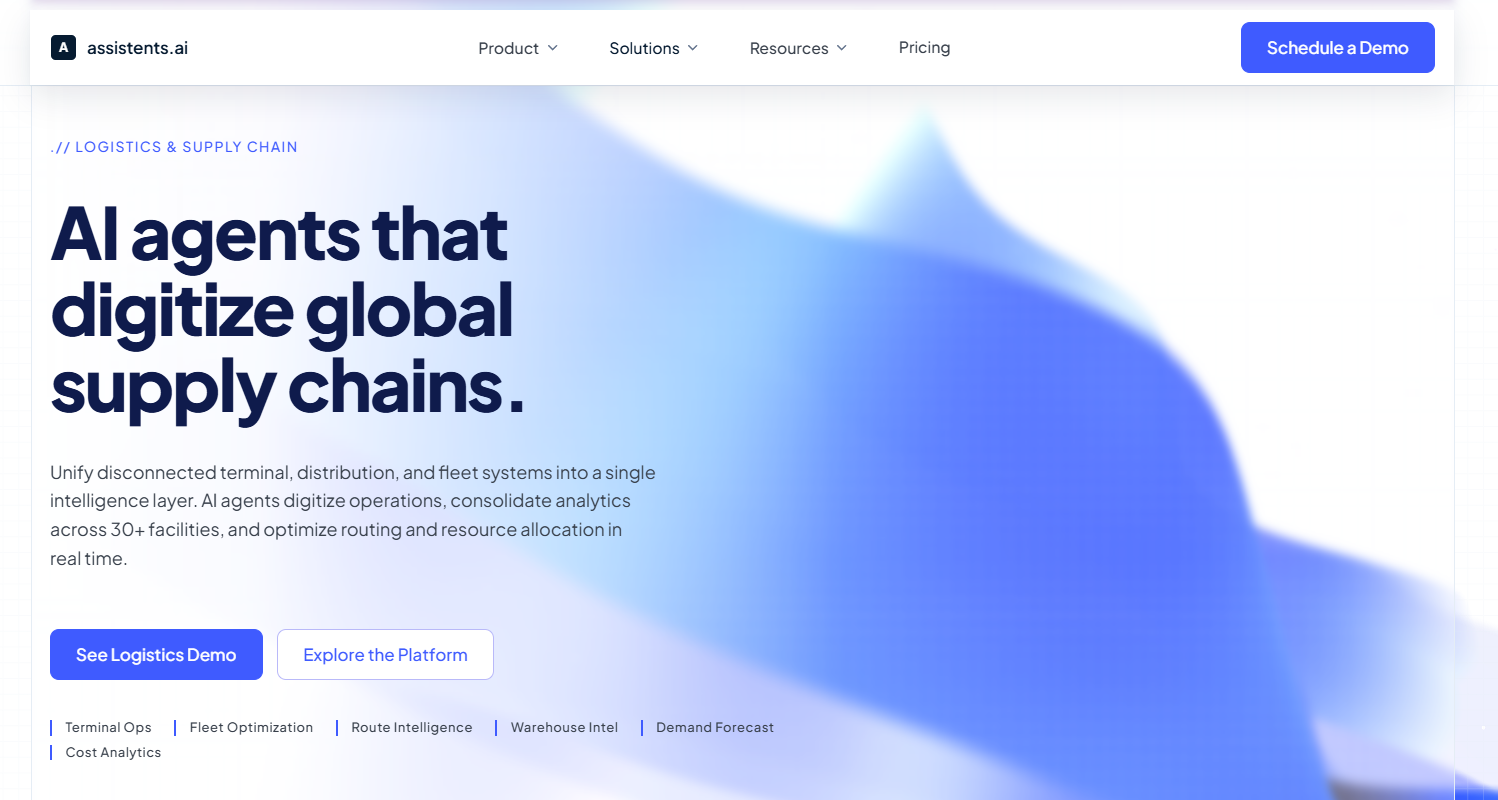
Supply chain operations involve constant exceptions — delayed shipments, substituted products, pricing discrepancies, and regulatory changes. RPA bots built for "happy path" scenarios fail when reality diverges.
Agentic AI agents can monitor supplier communications, track shipment statuses across carriers, automatically renegotiate delivery windows, and adjust procurement orders based on real-time demand signals.
Case Study — Multinational Logistics Company: An Indian multinational logistics and warehousing company serving customers across India, the UK, Europe, and the US was struggling with analytics consolidation across multi-entity global operations. Their existing systems couldn't unify KPIs across entities — each region had different reporting standards and data formats. By deploying agentic AI, they implemented cross-entity KPI standardization, operational dashboards with automated variance explanations, and a data quality governance layer. What previously took a team of analysts two weeks to compile into quarterly reports now happens continuously in real time.
Retail Operations
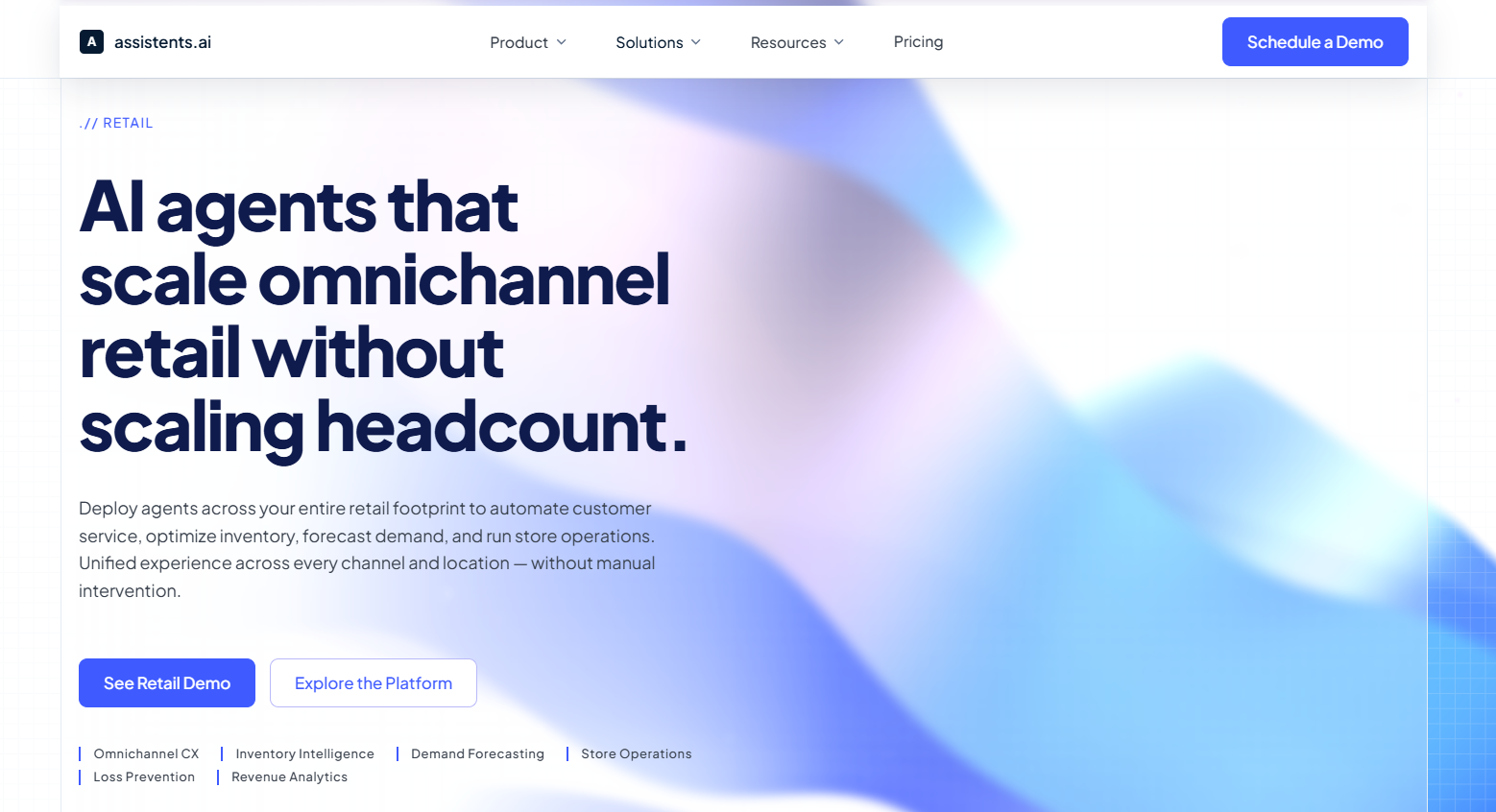
Large-scale retail involves complex coordination across inventory, pricing, promotions, and customer behaviour — across hundreds or thousands of locations. Traditional RPA can handle individual data pulls, but it can't make sense of the full picture.
Case Study — National Retail Chain (700+ Stores): A rapidly scaling value retailer with a pan-India footprint of 700+ stores needed to modernize store support, inventory visibility, and knowledge access at national scale. Their previous approach involved separate RPA bots for inventory queries, a basic chatbot for store staff, and manual SOP lookups. After switching to agentic AI, they deployed a voice support agent handling both Hindi and English, an inventory intelligence agent (covering pricing, stock, and promotions per store), and a knowledge and training agent built on top of their POS/SOP documentation. Store staff now get instant, contextual answers instead of waiting for regional support desk callbacks — reducing average query resolution from 45 minutes to under 3 minutes.
Healthcare Operations
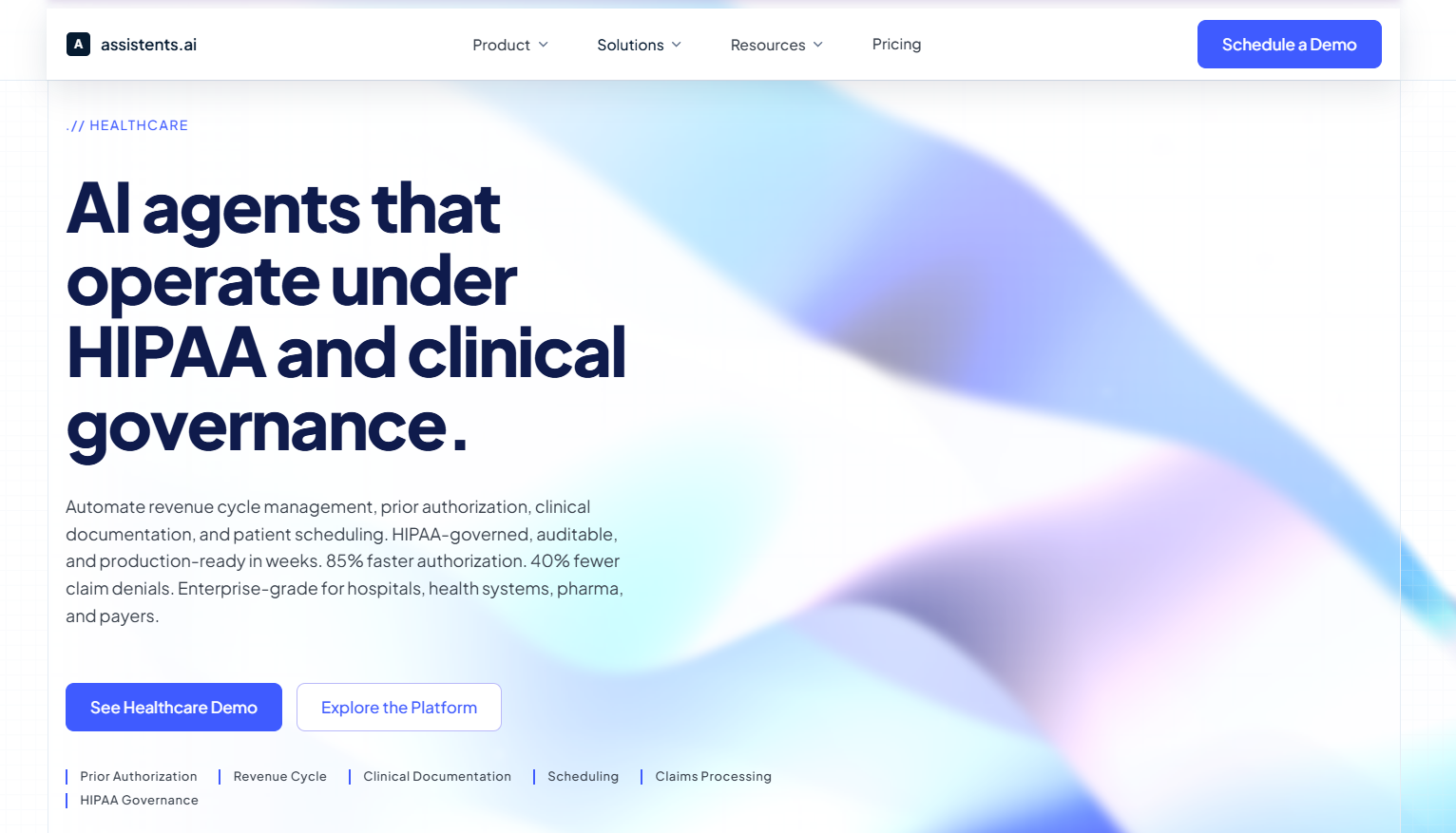
Healthcare generates enormous volumes of unstructured data: clinical notes, lab results, insurance forms, and patient communications. RPA bots struggle with the variability.
Case Study — Healthcare Staffing Platform (USA): A healthcare staffing platform connecting nursing professionals with facilities for flexible shifts was drowning in manual operations. Every staffing request required human matching, credential verification, schedule coordination, and compliance checks. Their early RPA attempt automated just the notification emails. With agentic AI, they built a full platform handling talent onboarding, credential capture, facility request intake with intelligent matching logic, scheduling with compliance workflows, and utilization reporting. Fill rates improved significantly while the operations team was reduced from 12 to 4 people managing the same volume.
Enterprise Document Processing
Perhaps nowhere is the RPA-to-agentic-AI shift more dramatic than in document-heavy workflows. Traditional bots need pixel-perfect templates; agentic AI reads like a human.
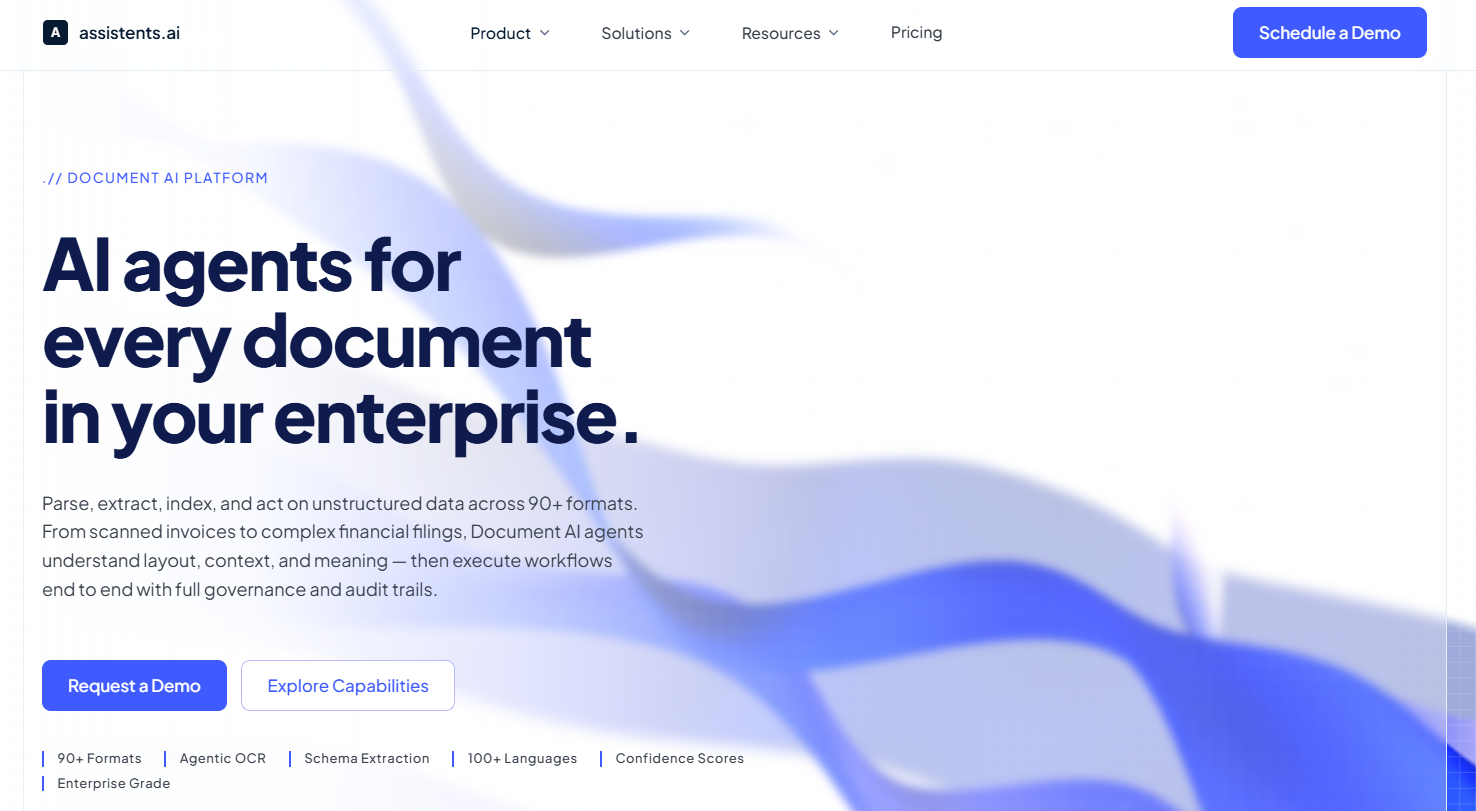
Case Study — Construction & Remediation Firm (Australia): An Australian waterproofing diagnostics and remedial building services company with 20+ years in the industry needed to process complex tender documents. Their workflow involved manually ingesting tenders, classifying document types, extracting key data points, and synchronizing everything into their operational system (Simpro). An RPA approach would have required separate bots for each document template. Instead, they deployed an Intelligent Document Workbench using multi-agent orchestration — with Vision-LLM extraction handling complex PDFs, automated workflow determination, revision analysis, and deep Simpro integration with full CRUD operations, quote locking, and audit logs. Documents that took a team member 2–3 hours to process are now handled in minutes with higher data integrity.
The Cost Equation: RPA vs. Agentic AI
One of the most common misconceptions is that agentic AI is prohibitively expensive. Let's break down the real numbers.
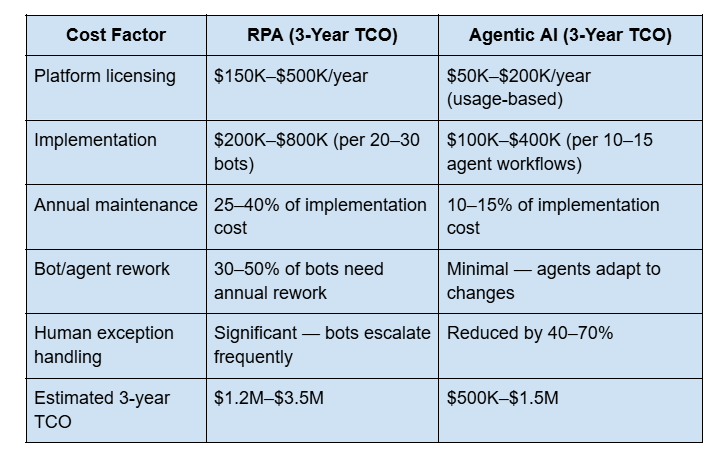
Note: These figures represent industry estimates for mid-market enterprises (500–5,000 employees). Actual costs vary based on complexity, vendor, and scale.
The key insight isn't just the upfront cost — it's the total cost of ownership. RPA's hidden costs in maintenance, rework, and human exception handling compound over time. Agentic AI's adaptive nature means those costs decrease as the system learns and improves.
Decision Framework: Should You Choose RPA or Agentic AI?
This isn't an either/or decision for most organizations. The right answer depends on where you are today and what you're trying to accomplish. Here's a practical framework.
Stick with RPA if:
- Your processes are highly stable and haven't changed in 2+ years
- You're automating fewer than 10 simple, rule-based tasks
- Your data is 100% structured with consistent formats
- Your existing RPA bots are delivering strong ROI with minimal maintenance
Upgrade to Agentic AI if:
- You're spending significant resources maintaining and fixing broken bots
- Your processes involve unstructured data, exceptions, or judgment calls
- You need to scale automation beyond simple repetitive tasks
- You're looking to automate end-to-end workflows, not just individual steps
- Your competitive landscape demands faster, smarter operations
Consider a hybrid approach if:
Many organizations are finding success with a phased approach: keep RPA running for stable, simple processes while deploying agentic AI for complex, high-value workflows. Over time, the agentic AI layer can absorb more of the workload as it proves its reliability.
How to Transition from RPA to Agentic Process Automation
Moving from RPA to agentic AI doesn't require ripping out your existing infrastructure overnight. Here's a pragmatic roadmap.
Phase 1 — Audit and Prioritize (Weeks 1–2): Catalog your existing RPA bots. Identify which ones break most frequently, cost the most to maintain, or handle processes with high exception rates. These are your top candidates for agentic AI replacement.
Phase 2 — Pilot with High-Impact Workflows (Weeks 3–8): Select 2–3 workflows where agentic AI can demonstrate clear value. Deploy AI agents alongside existing bots (not replacing them yet) to validate performance, accuracy, and cost savings.
Phase 3 — Scale and Migrate (Months 3–6): Based on pilot results, begin migrating additional workflows. Establish governance frameworks for AI agent behavior, monitoring, and human-in-the-loop checkpoints for high-stakes decisions.
Phase 4 — Optimize and Expand (Months 6–12): Extend agentic AI to new business areas. Use performance data from earlier phases to refine agent behavior, improve accuracy, and reduce human oversight where appropriate.
Pro tip: The biggest risk in any automation transition isn't technology — it's change management. Bring your operations teams into the process early. Show them how agentic AI handles exceptions they currently manage manually. That's when buy-in happens.
The Future of Enterprise Automation: What's Next
The trajectory is clear. Enterprise automation is moving from deterministic scripts to intelligent agents. Here's what business leaders should watch for in 2026–2027:
Multi-agent orchestration: Instead of single agents handling individual tasks, enterprises will deploy teams of specialized agents that collaborate — one handling data extraction, another performing analysis, a third managing communications — all coordinated by an orchestration layer.
Industry-specific agent platforms: Vertical-specific agentic AI solutions for healthcare, financial services, legal, and manufacturing will accelerate adoption by offering pre-built agent behaviors and compliance frameworks.
Agent-to-agent economies: As more organizations deploy AI agents, we'll see agents from different companies negotiating contracts, processing orders, and resolving disputes autonomously — a machine-to-machine business layer.
Regulatory frameworks: Governments and industry bodies are beginning to establish governance standards for autonomous AI agents in enterprise settings. Early movers who build compliant agent architectures will have a competitive advantage.
Conclusion: The Automation Decision Your Business Faces Today
The choice between RPA and agentic AI isn't just a technology decision — it's a strategic one. Organizations that continue relying solely on rigid, rule-based bots will find themselves spending more to maintain systems that handle less. Those that embrace agentic process automation will unlock a new tier of operational capability: faster processing, fewer errors, lower costs, and the ability to automate work that was previously considered "too complex for bots."
The question isn't whether agentic AI will transform enterprise automation. It's whether your organization will lead that transformation or play catch-up.
Ready to explore agentic process automation? Assistents by Ampcome helps enterprises build and deploy intelligent AI agents that automate complex workflows — without the fragility of traditional RPA. Our no-code platform integrates with 100+ enterprise tools and gets your first agent live in 48 hours.
Learn more at assistents.ai
Frequently Asked Questions
Is agentic AI going to completely replace RPA? Not immediately, and not universally. RPA still works well for simple, stable, rule-based tasks. However, for any process involving variability, unstructured data, or decision-making, agentic AI is clearly superior. Over the next 3–5 years, we expect agentic AI to absorb the majority of enterprise automation workloads.
How reliable are AI agents compared to RPA bots? Modern AI agents achieve 90–98% accuracy on well-defined enterprise tasks, which is comparable to (and often better than) RPA bots that frequently break due to process changes. The key difference: when an AI agent encounters something unexpected, it adapts. When an RPA bot encounters the unexpected, it fails.
What about data security and compliance? Enterprise-grade agentic AI platforms are built with security-first architectures, including data encryption, access controls, audit logging, and compliance certifications (SOC 2, HIPAA, GDPR). AI agents can be configured with strict boundaries on data access and decision authority.
How long does it take to see ROI from agentic AI? Most organizations report measurable ROI within 2–3 months of deployment, driven by reduced maintenance costs, fewer human escalations, and faster processing times. The ROI compounds over time as agents learn and improve.
Can agentic AI work with our existing enterprise software? Yes. Agentic AI platforms integrate with existing enterprise tools through APIs, webhooks, and native connectors. They can work alongside — and gradually replace — existing RPA bots without requiring a full technology overhaul.

Transform Your Business With Agentic Automation
Agentic automation is the rising star posied to overtake RPA and bring about a new wave of intelligent automation. Explore the core concepts of agentic automation, how it works, real-life examples and strategies for a successful implementation in this ebook.
Sarfraz Nawaz is the CEO and founder of Ampcome, which is at the forefront of Artificial Intelligence (AI) Development. Nawaz's passion for technology is matched by his commitment to creating solutions that drive real-world results. Under his leadership, Ampcome's team of talented engineers and developers craft innovative IT solutions that empower businesses to thrive in the ever-evolving technological landscape.Ampcome's success is a testament to Nawaz's dedication to excellence and his unwavering belief in the transformative power of technology.

More insights
Discover the latest trends, best practices, and expert opinions that can reshape your perspective







Contact us

